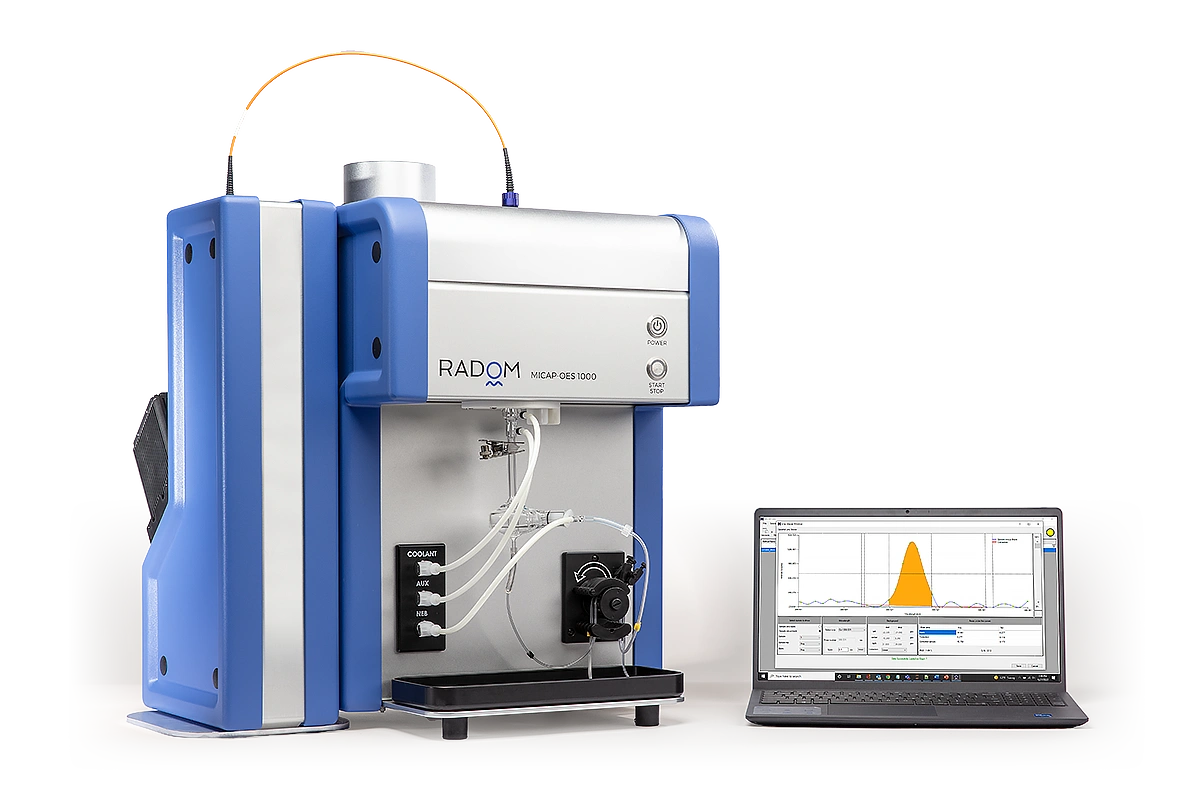
MICAP-OES 1000
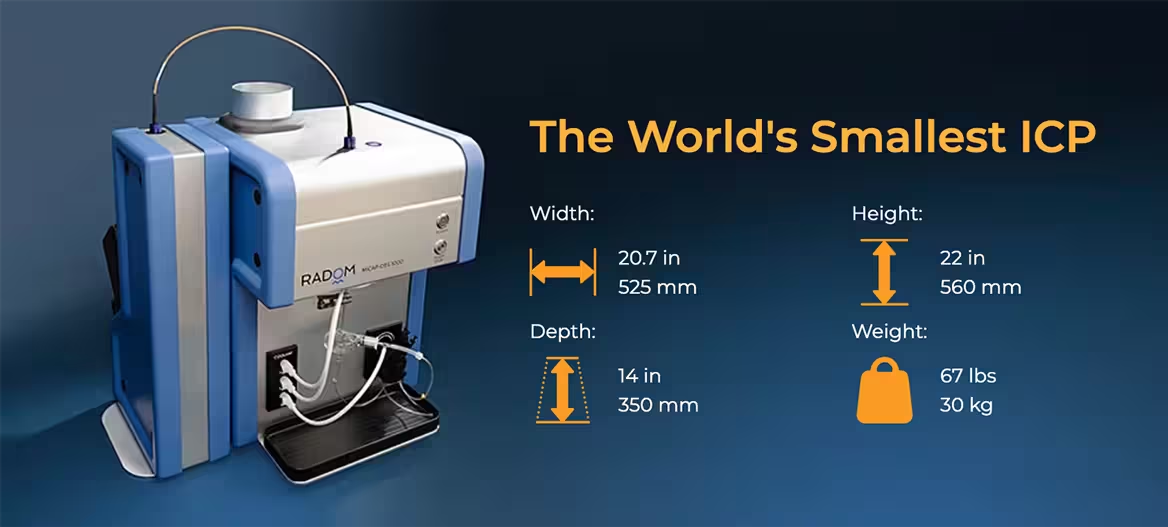
The World's Smallest ICP
Compact benchtop inductively coupled plasma optical emission spectrometer
Key Features
- Microwave plasma source – runs on Nitrogen
- High matrix tolerance
- High efficiency energy coupling – no water chiller required
- High resolution, simultaneous compact spectrometer
- Low operating costs – can operate from local N₂ generator

How Does It Work?
This video demonstrates how the N₂ plasma in the MICAP is created. Microwave power coupled into the Cerawave ring induces the plasma, which is seeded with a high voltage spark. Sample aerosol introduced into the plasma generates light emission from the excited elements.
Description
MICAP-OES 1000 is a microwave N₂ ICP-OES system with independent plasma source and high-resolution spectrometer components – which are coupled together with an optical fiber to transmit the emitted light.
Vertically orientated axial-viewed plasma utilizing an air knife for plasma tail removal. Standard ICP torch dimension (20 mm diameter). Fully air-cooled operation under normal laboratory conditions.
Modular design supports quick and easy setup, along with installations in remote locations where traditional laboratory support is not available
Dimensions (WxHxD)
- 20.7 x 22 x 14 IN (525 x 560 x 350 mm)
- Height excludes fiber optic & ventilation port
Weight
- Total weight of both modules 67 lbs (30 Kg)
Simultaneous Spectrometer
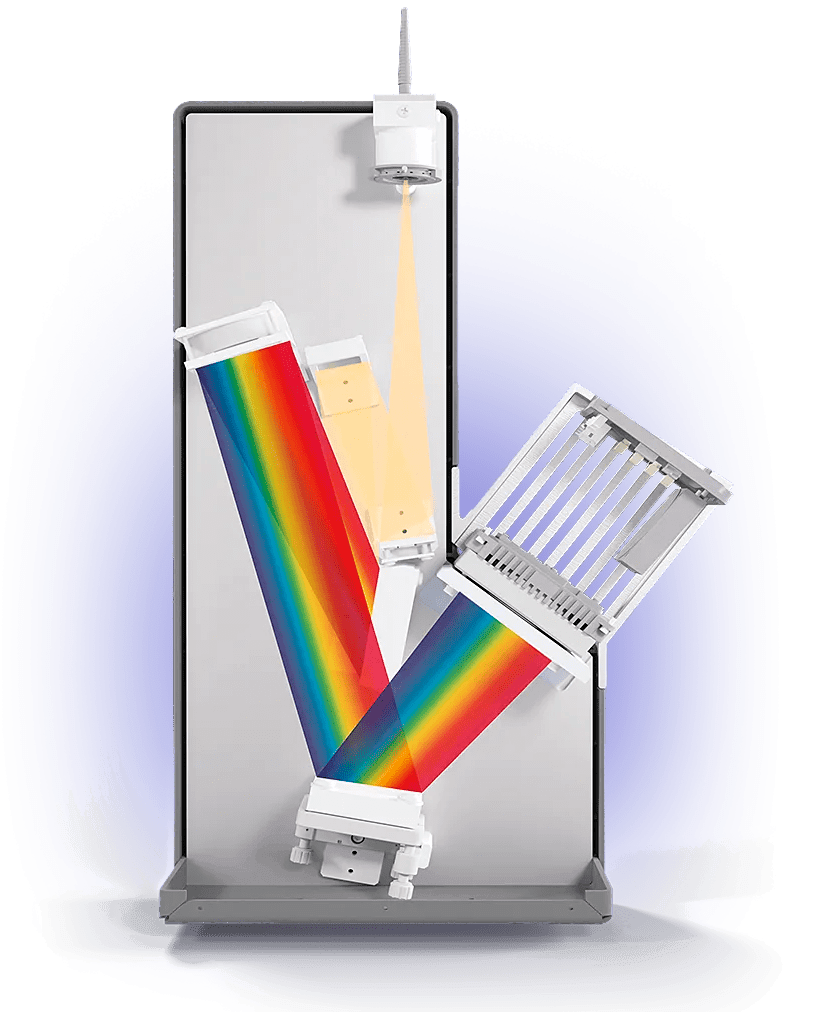
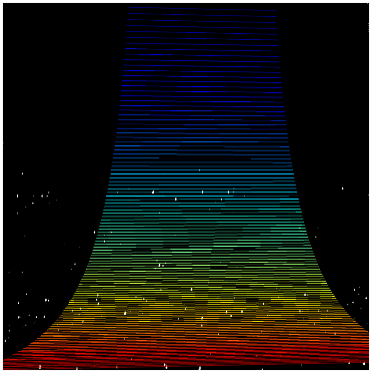
- Echelle spectrometer, 194 – 625 nm continuous + 766 nm
- Peak resolution 5 – 30 pm, 7 pm at 200 nm
- 4 MP sCMOS detector
- Fiber optic coupling to plasma unit
- ActivePeak tracking
Power Requirements
- Plasma source: 208 – 240 V / 10 A
- Spectrometer: 110 – 240 V / 8 A
- PC 110 – 240 V
- Autosampler: 100 – 249 V

Gas Supplies
- Nitrogen, 99.99% purity, typically 16 L/min
- Compressed Air, clean/dried/filtered. 25 L/min
- Argon, 99% purity, 2 L total per ignition sequence

Environmental Requirements
| Conditions | Temperature Range | Temperature Stability | Relative Humidity | Recommended Altitude (from sea level) | Exhaust (4” duct) |
|---|---|---|---|---|---|
| Normal | 18-24°C (64 – 75°F) | < 2°C/hr (< 3.6°F/hr) | 20 – 80 % (non-condensing) | -400 to 3000 m (1300 to 10,000 ft) | 100-120 cfm (5.8 – 7 m/s) |
| Elevated* | 25-30° C ( 77- 86°F) | < 2°C/hr (< 3.6°F/hr) | 20 – 80 % (non-condensing) | -400 to 3000 m (1300 to 10,000 ft) | 100-120 cfm (5.8 – 7 m/s) |